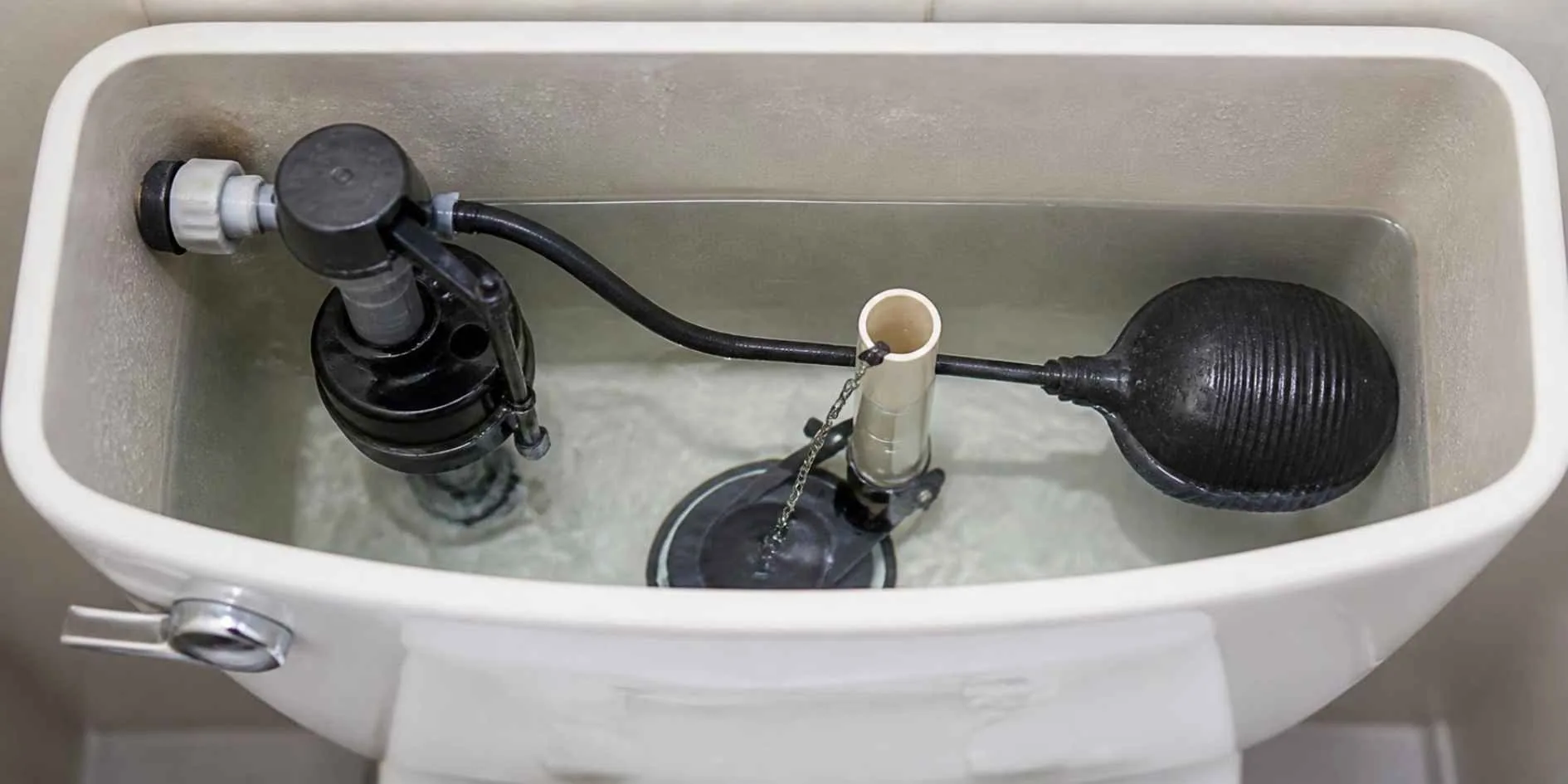
A running toilet is one of the most common plumbing complaints, and it's also one of the easiest to misdiagnose without knowing where to actually look. Most causes trace back to one of two components, and telling them apart takes about two minutes.
The Flapper: The Most Common Cause
The flapper is the rubber seal at the bottom of the tank that lifts when you flush and drops back to seal the tank. A worn, warped, or mineral-coated flapper doesn't seal completely, letting water slowly leak into the bowl, which triggers the fill valve to keep topping off the tank, the source of that continuous running sound.
You can check this yourself: add a few drops of food coloring to the tank water, wait 15 minutes without flushing, then check the bowl. If color has appeared in the bowl, the flapper isn't sealing and needs replacement, a straightforward, inexpensive part.
The Fill Valve: The Second Most Common Cause
If the flapper test comes back clean but the toilet still runs, the fill valve itself may be the issue, either failing to shut off completely or set at a water level high enough to constantly trickle into the overflow tube. This is a different part than the flapper and needs its own diagnosis and replacement.
Why Tempe's Hard Water Makes This Worse
Mineral buildup from Tempe's hard water accelerates wear on both the flapper and fill valve seals faster than it would in softer water, which is part of why these components tend to need replacement more often here than the manufacturer's general lifespan estimates suggest. Our toilet repair page covers the full range of issues we see, from these common running-toilet causes to base leaks and flush problems.
What This Actually Costs If Ignored
A continuously running toilet can waste hundreds of gallons a day, which shows up as a real, measurable increase on your water bill the entire time it goes unaddressed. In a rental property, especially in a high-turnover area, this is exactly the kind of issue covered in our post on rental plumbing near ASU that's easy to overlook between tenants but costs real money the whole time it's ignored.
A Less Common But Real Third Cause
If both the flapper and fill valve check out fine but the toilet still runs intermittently, the fill valve's water level may simply be set too high, allowing water to trickle into the overflow tube without a full component failure. Adjusting the float to lower the fill level slightly is a simple fix worth trying before assuming a part needs replacing.
When This Actually Warrants a Professional Visit
A single toilet with a straightforward flapper or fill valve issue is genuinely a reasonable DIY repair for most homeowners. It's worth calling for help when multiple toilets are affected at once, or when a replaced part doesn't resolve the running. It's also worth calling if you notice water at the base of the toilet in addition to the running sound, since that combination suggests something beyond the tank components alone.
A Quick Way to Confirm the Repair Actually Worked
After replacing a flapper or fill valve, run the dye test again a day or two later rather than assuming the fix held based on the sound alone. A repair that seems to have stopped the audible running can still have a slow, silent leak that only the dye test will reveal, and confirming it properly avoids a surprise on the next water bill.
A Note on Toilet Age and Replacement Parts
Older toilets, particularly those installed before the 1990s, sometimes use tank components that are harder to find as exact replacements. If a flapper or fill valve for your specific model isn't readily available, a universal replacement kit usually works, though it's worth confirming compatibility before assuming any generic part will seal properly against an older tank's specific shape.
How This Fits Into Regular Home Maintenance
Treating a flapper and fill valve as parts with a real, finite lifespan, rather than something you only think about once a symptom appears, is the more proactive approach. A quick visual check of the tank's internal components once a year, even without an obvious problem, catches early wear before it turns into a running toilet and an unexpected water bill increase.
A Final Word on the Cost of Waiting
The parts involved in this repair are inexpensive, and the labor, whether DIY or professional, is minimal for a straightforward diagnosis. The only real cost of a running toilet is the water it wastes while it keeps running, which means the cost of waiting genuinely grows every single day the issue goes unaddressed, unlike many home repairs where delay doesn't actively cost you anything.
One More Thing Worth Checking
If you've recently had any plumbing work done elsewhere in the house, a sudden new running toilet afterward is worth mentioning to whoever did that work. A pressure change from unrelated repairs can occasionally reveal a fill valve issue that was already borderline but hadn't yet caused an audible problem. It's a coincidence worth ruling out rather than assuming.
Why This Guide Focuses on the Two Most Common Parts
There are other, rarer causes of a running toilet, a cracked overflow tube, a misaligned float arm, a failed tank-to-bowl gasket, but the flapper and fill valve together account for the overwhelming majority of real-world cases. Starting with the dye test and a look at the fill valve resolves most calls before any of the less common causes even need to be considered.
Common Questions
Often, yes. Flapper and fill valve replacements are both straightforward, inexpensive repairs that many homeowners handle themselves once the actual cause is identified with the dye test.
It varies by the specific failure, but a continuously running toilet can waste hundreds of gallons per day, which adds up to a real, noticeable increase on a water bill even over just a few days.
Usually not on its own, running toilets are typically an isolated flapper or fill valve issue. But if multiple toilets in the house start running around the same time, that's worth a broader look rather than assuming coincidence.
Intermittent running, sometimes called a phantom flush, often means a slow flapper leak that periodically drops the tank level enough to trigger a brief refill cycle, rather than a fill valve that never shuts off at all.
Dual-flush mechanisms have a somewhat more complex valve assembly than a standard single-flush toilet, which can mean slightly more components that could eventually need attention, though the core flapper-or-fill-valve diagnosis still applies to both types.
Have This Problem In Tempe?
Call now for a real diagnosis and a flat price before any work starts.
☎ Call (480) 741-9332