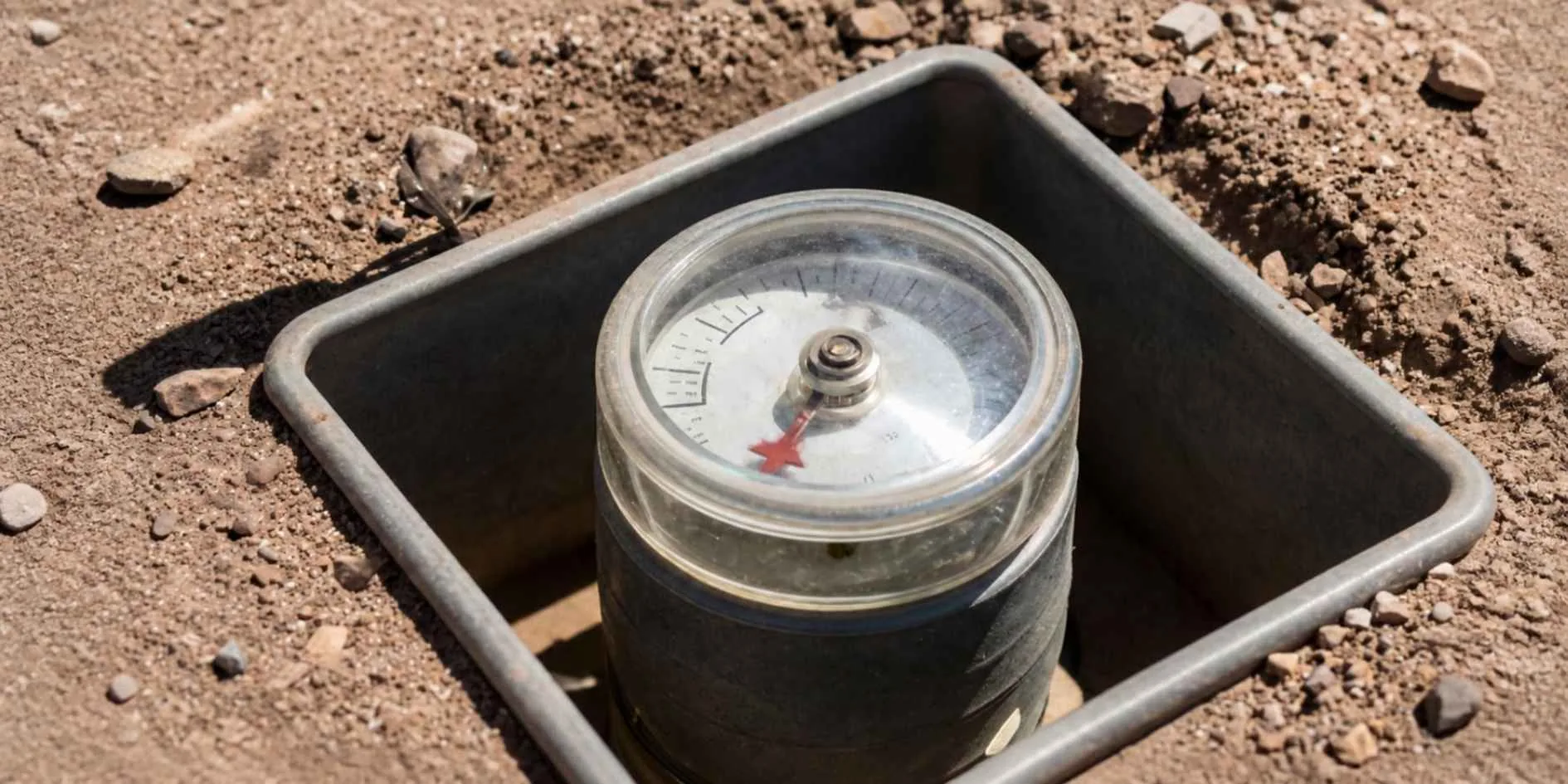
A water bill that jumps with no change in household habits is one of the most common reasons people call a plumber in Tempe, and a hidden leak is the most common cause, but it isn't the only one. Before assuming the worst, a simple meter test, the standard first step according to most water utilities' own guidelines, can confirm whether water is actually running somewhere it shouldn't be.
The Meter Test: Do This First
Locate your water meter, shut off every fixture and appliance that uses water in the house, then read the meter's current number. Wait 30 minutes without using any water, then read it again. If the number moved at all, water is flowing somewhere on the property even though nothing was intentionally running.
Most meters also have a small triangular or star-shaped low-flow indicator that spins with even a very small, continuous flow. Watching that indicator for a minute with everything off is a faster, rougher version of the same test.
Real Causes Beyond a Pipe Leak
A running toilet is the single most common hidden cause, and it can waste hundreds of gallons a day completely silently. A dye test, a few drops of food coloring in the tank, checked against the bowl 15 minutes later without flushing, confirms it in minutes.
In Tempe specifically, irrigation and pool equipment are worth checking too. A stuck irrigation valve or a pool autofill that's running longer than it should both show up as steady, unexplained usage rather than a dramatic spike, and both are easy to overlook since neither looks like a typical household leak.
When It's Actually a Hidden Pipe Leak
If the meter test confirms continuous flow and you've ruled out a running toilet and irrigation, the remaining likely causes are a slab leak, a leak in the water line between the meter and the house, or a leak inside a wall. Leak detection uses acoustic and thermal equipment to find the actual location rather than guessing, which matters since these leaks are, by definition, not visible.
In Tempe's older neighborhoods, particularly homes from the 1970s through the 1990s in South Tempe and Guadalupe, an aging copper line is genuinely more likely to be the cause than in a newer home. That's not a reason to panic, but it is a reason to take a confirmed continuous flow reading seriously rather than waiting for another bill to confirm it.
What a Normal Seasonal Increase Looks Like
Not every increase means a problem. Summer irrigation and pool top-offs genuinely raise usage in Tempe compared to cooler months, and a gradual, explainable rise tied to weather or a longer irrigation cycle isn't the same signal as a sudden jump with no seasonal explanation. The real red flag is a spike that doesn't match a change in season, guests, or outdoor watering.
Keeping This From Happening Again
A yearly toilet flapper check, even on toilets that seem fine, catches wear before it becomes a silent leak. Toilets are mechanical parts sitting in water constantly, and flappers degrade whether or not anyone notices a symptom yet.
For irrigation systems specifically, a spring check of valves and emitters before the heavy summer watering season starts catches a stuck valve before it runs unnoticed for months. Combined with an occasional meter test, especially after any unusual bill, most households can catch a developing leak well before it becomes a major repair.
When the Cause Turns Out to Be Bigger Than Expected
Occasionally a meter test and a check of toilets and irrigation all come back clean, yet the bill is still climbing. At that point, the remaining possibilities genuinely do require professional equipment to locate: a slab leak, a leak in the line between the meter and the house, or a leak inside a wall cavity. None of these are things a homeowner can reasonably diagnose without acoustic or thermal detection tools, which is the point where a real inspection becomes worth the cost rather than continuing to guess.
What to Bring to That Inspection Call
Having a few months of past bills on hand helps establish exactly when the increase started, which narrows down the likely cause faster than a technician starting from zero. Noting whether the increase was sudden or gradual, and whether it coincided with any specific event, a new appliance, a repair, a change in household size, gives real, useful context that speeds up an accurate diagnosis rather than a longer trial-and-error process.
A Final Word on Trusting Your Own Test
It's worth trusting a clean meter test result rather than second-guessing it just because the bill still feels wrong. If the meter genuinely shows no movement with everything off, the increase is coming from real usage somewhere, whether that's a forgotten irrigation cycle, guests, or a seasonal change, rather than a hidden leak. Chasing a leak that the meter test has already ruled out wastes time and money that would be better spent reviewing actual usage patterns instead.
The Bottom Line
A half-hour meter test costs nothing and answers the most important question first: is water actually running somewhere it shouldn't be. Everything else, from a running toilet to a slab leak, follows from that one answer, which is why it's always the right place to start before assuming the worst or spending money on a repair you don't actually need yet. Start there before anything else.
Common Questions
Thirty minutes is usually enough to catch a meaningful leak, though a very small, slow leak might take longer to register. If the first test comes back clean but you're still suspicious, running it again for a full hour is a reasonable next step.
It's possible, though less common than a real leak. If your own meter test shows no movement with everything off, but the bill still seems wrong, the water utility can test the meter itself for accuracy.
No, it's one of several possibilities. A running toilet, irrigation issue, or pool autofill are all more common and less expensive causes worth ruling out before assuming a slab leak.
Running the test yourself first is free and takes half an hour, so it's worth doing before a service call. If it confirms continuous flow, that result actually helps a technician diagnose faster.
Yes. An autofill valve stuck in the open position keeps adding water to compensate for a level that isn't actually dropping from evaporation, which shows up as steady, unexplained usage rather than a dramatic spike.
It can, since regeneration uses a real amount of water to flush the resin bed, though a properly sized and functioning unit's cycle is a small, predictable amount rather than the kind of increase that suggests a leak.
Have This Problem In Tempe?
Call now for a real diagnosis and a flat price before any work starts.
☎ Call (480) 741-9332