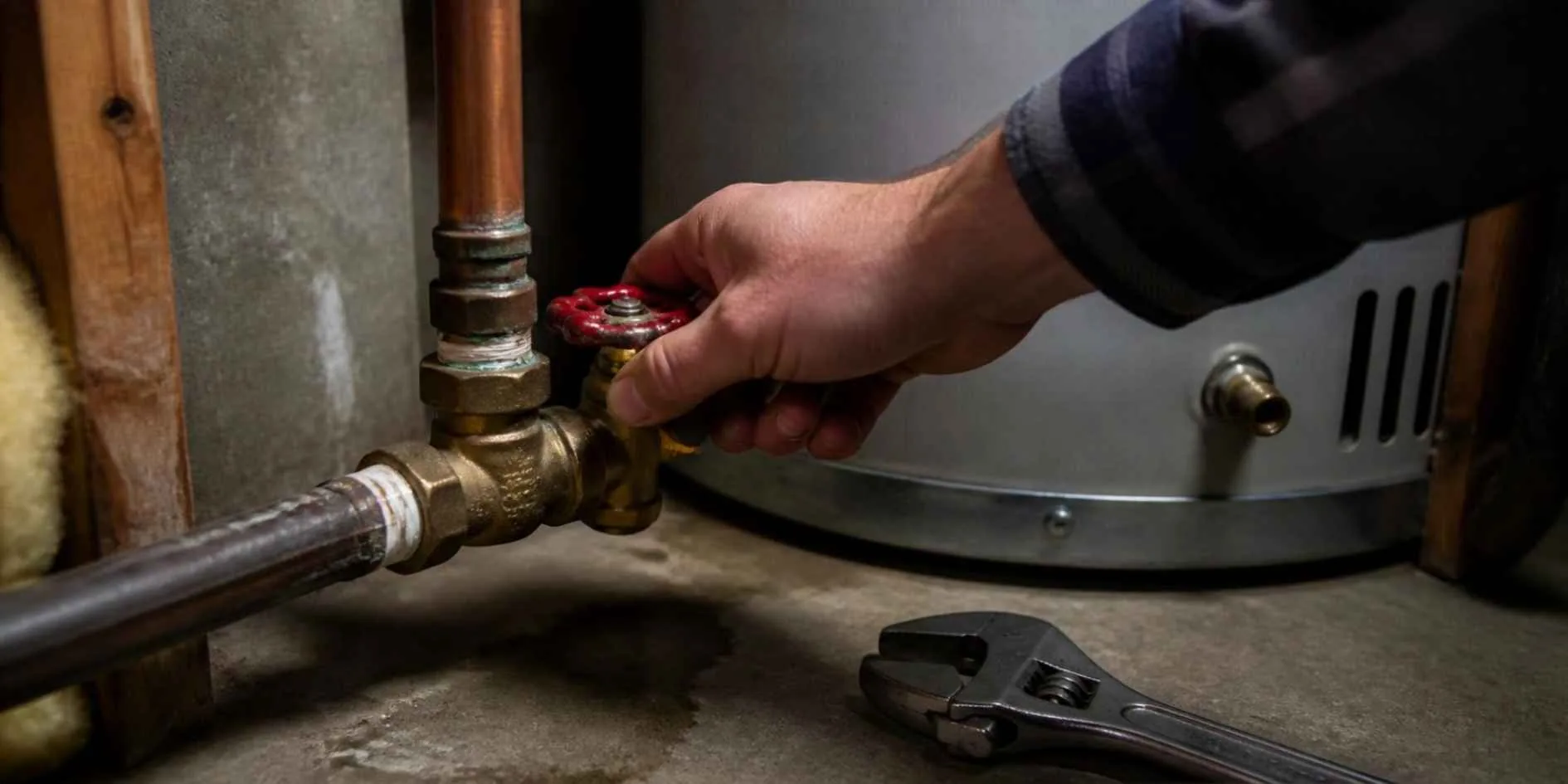
The first few minutes after discovering a burst pipe matter more than almost any other part of the process, since what you do before help arrives genuinely affects how much damage the event ends up causing. None of these steps require any plumbing skill, just knowing what to do in order.
Step One: Shut Off the Water
Locate your main water shutoff valve and turn it off immediately. This is almost always the single most impactful thing you can do, since it stops the source rather than just managing the symptom. If you don't already know where your main shutoff is, finding it now, before an emergency, is worth five minutes of your time.
If the burst is isolated to one fixture and you know where that fixture's own shutoff valve is, that can work as a faster, more targeted alternative to the whole-house main.
Step Two: Address Electrical Safety
If water is pooling near an electrical outlet, panel, or any plugged-in appliance, shutting off power to that area at the breaker is a real safety step, not an overreaction. According to standard electrical safety guidance, you should never step into standing water near an active electrical source to reach a switch or outlet.
Step Three: Limit the Spread
Move furniture, electronics, and belongings out of the affected area if it's safe to do so. Towels and a wet vacuum, if you have one, can slow water from spreading into unaffected rooms while you wait, though this is about limiting spread, not attempting any actual repair.
Step Four: Document Before Cleanup
Photograph the damage before moving or cleaning anything, since this genuinely helps if you file an insurance claim. Note the time you discovered the burst and when you shut off the water, details that are easy to forget once things get busy. If the flooding is significant, water mitigation alongside the pipe repair itself is worth discussing when you call.
For a home already showing older copper or galvanized plumbing, this event is also worth a broader conversation about repiping rather than treating it as an isolated, unlucky event.
What Not to Do While Waiting
Don't attempt to cut into a wall or ceiling to chase the source of a burst pipe on your own. Without knowing exactly where the break is, an untrained attempt to access it often causes more damage than the leak itself. Don't run additional water anywhere else in the house either, since that adds volume to a system you've already shut off for a reason.
After the Immediate Emergency Is Handled
Once the water is shut off and the immediate spread is controlled, resist the urge to fully clean up before a technician arrives, especially if you're planning to file an insurance claim. Beyond the photos, keeping a rough written timeline, when you found it, when you shut off the water, when help arrived, gives your insurer and your plumber a clearer picture than memory alone will provide days later.
What to Have Ready When You Call
Knowing your address, the approximate location of the burst if you can see it, and whether you've already shut off the main water valve all help dispatch route the right response faster. If the burst is affecting a specific fixture rather than a main line, mentioning that upfront also helps narrow down what to expect on arrival.
Why Staying Calm Actually Matters Here
A burst pipe looks and sounds worse than the actual damage often turns out to be, especially once the water is shut off within the first few minutes. Panic tends to lead to skipped steps, like forgetting to check for electrical hazards or failing to note the time, that make the aftermath harder to manage than the leak itself needed to be. Working through the steps in order, rather than reacting to the visible water first, genuinely produces a better outcome.
A Simple Checklist to Keep Handy
Printing or saving these four steps somewhere accessible, a phone note, a magnet on the fridge near the breaker panel, means you're not trying to recall them from memory during an actual emergency. Shut off the water. Address electrical safety. Limit the spread. Document before cleanup. In that order, every time.
The Value of Knowing Your Shutoff Before You Ever Need It
The single biggest predictor of how much damage a burst pipe causes is how quickly the water gets shut off, and that speed depends entirely on whether you already know where the valve is. Taking five minutes today, before any emergency, to locate and test your main shutoff is genuinely one of the highest-value things a homeowner can do for free.
Sharing This With Everyone in the Household
A burst pipe doesn't wait for the one person in the house who knows where the shutoff valve is to be home. Making sure every adult and older teenager in the household knows the valve's location and how to operate it means the response doesn't depend on one specific person being present when it happens. This is a five-minute conversation worth having once, rather than an assumption that turns out wrong at the worst possible moment.
A Final Word on Why Preparation Beats Reaction
Every step in this guide is something you can do before an emergency ever happens, locate the valve, know the electrical panel's location, keep a phone number saved. None of it requires plumbing knowledge, just a few minutes of preparation on an ordinary day. That small investment consistently pays off far more than trying to figure any of it out for the first time while water is actively flowing somewhere it shouldn't be, when every minute genuinely counts.
Common Questions
Common locations include near the water meter at the property line, in a basement or crawlspace, or in a utility closet. If you genuinely can't locate it during an active emergency, call immediately rather than continuing to search while water damage accumulates.
No, a temporary patch on a pressurized line rarely holds and can make the eventual repair more complicated. Shutting off the water source is the effective step; attempting a DIY patch usually isn't.
Yes, as long as it's not plugged in near standing water and the outlet you're using is not itself wet or at risk of contact with the water.
Burst pipes are treated as true emergencies with priority dispatch, so response time is typically much faster than a scheduled appointment, though exact timing depends on your location and current call volume.
If the burst is on the hot water side, yes, since that stops the heater from continuing to run against a system that's lost pressure, which can otherwise damage the unit itself.
Have This Problem In Tempe?
Call now for a real diagnosis and a flat price before any work starts.
☎ Call (480) 741-9332