A slab leak, a leak in a water line running underneath a home's concrete foundation, is genuinely more common in the Tempe area than in a lot of the country. Two real, local factors drive that: expansive clay and caliche soil that shifts with moisture, and a lot of housing stock old enough for its original copper lines to be at real risk.
The Four Real Signs
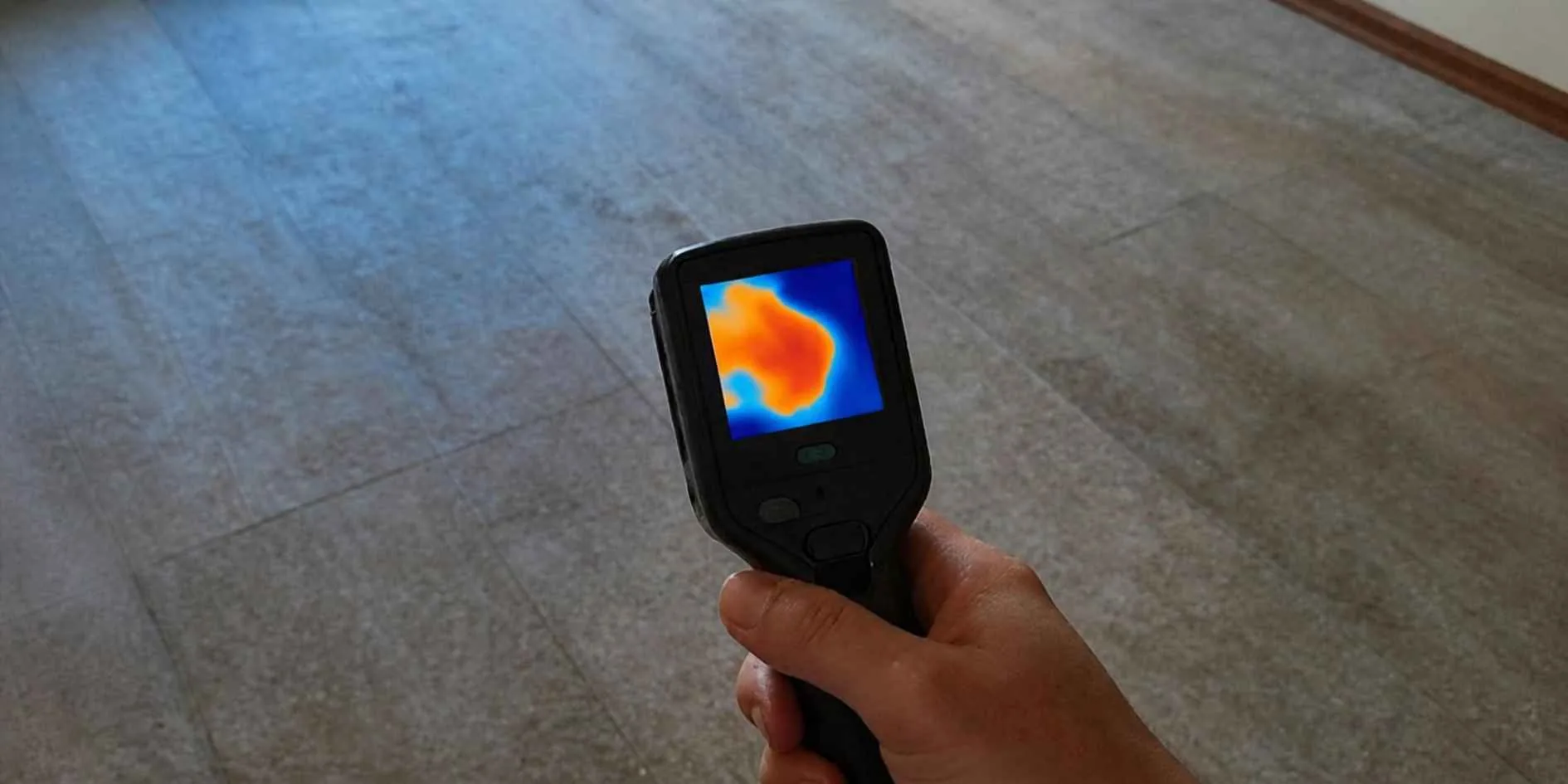
A warm spot on the floor is the most distinctive sign, and it specifically points to a hot-water line leaking, since a cold-water leak won't carry the same heat signature. It usually shows up on tile or hard flooring before carpet, since carpet insulates the warmth somewhat.
A steadily rising water bill with no change in household usage is the second sign, and it's often the first thing anyone notices, since a slab leak can run continuously rather than intermittently. A drop in water pressure across multiple fixtures, not just one, is the third sign worth taking seriously. The fourth, audible running water under the floor with every fixture in the house shut off, is the least common but the most conclusive when it happens.
Why Tempe-Area Homes See This More
Much of the Tempe area sits on expansive clay and caliche soil that swells when wet and contracts when dry, according to the same soil pattern documented across the City of Tempe's service area. That repeated movement is exactly the kind of stress that eventually cracks a rigid copper line running underneath a slab. South Tempe homes built mainly from the 1970s through the 1990s are old enough that their original copper is now decades into a service life that hard water has been quietly corroding from the inside the entire time.
None of this means a slab leak is inevitable in an older home, but it does mean the four signs above deserve a real inspection rather than a wait-and-see approach, especially once more than one of them shows up at the same time.
What Happens During an Inspection
A real slab leak inspection uses acoustic listening equipment to trace the specific sound of pressurized water escaping underground, sometimes paired with thermal imaging to confirm a hot-water line's heat signature. The goal is confirming the exact location before any concrete gets cut, since cutting on a guess is how a simple repair turns into an expensive one.
What Not To Do While You Wait
If you suspect a slab leak, shutting off the main water valve is a reasonable step if the leak seems significant enough to cause real damage before a technician arrives. Don't shut off just the water heater alone and assume that solves it, since a slab leak can be on either the hot or cold side of the system.
Don't attempt to locate the leak by cutting into flooring or drywall on your own. Without acoustic or thermal equipment, a DIY search is far more likely to open up an area that isn't the actual leak, adding a repair cost that didn't need to exist. Document any visible signs, a warm spot's location, a specific date the water bill jumped, before the technician arrives, since that timeline genuinely helps narrow down the diagnosis.
If the leak is affecting a homeowner's insurance claim, photograph any visible water damage before cleanup begins. Insurance coverage for slab leaks varies by policy, some cover the cost of accessing and repairing the leak itself, others only cover resulting damage to the structure, so it's worth a call to your insurer alongside the plumbing call, not instead of it.
Repair Versus Reroute: Why the Line's Age Matters
Once a slab leak is confirmed, the real decision is whether to repair that one section directly through the slab, or to abandon the damaged line entirely and reroute new pipe through the attic or walls above the foundation. A single leak in an otherwise newer line, PEX or more recent copper, is often a reasonable candidate for a direct repair, since the rest of the line still has a lot of service life left.
An older home with original 1970s-90s copper is a different conversation. One confirmed pinhole leak in a line that age is a real signal, not a coincidence, that corrosion has been progressing throughout the whole line, and more leaks are a realistic possibility within the next few years. In that case, a full or partial reroute above the slab, while more labor upfront, avoids paying for a second slab cut a year or two later.
Where This Risk Concentrates
The same housing-age pattern that drives slab leaks in South Tempe shows up just as clearly in Ahwatukee, where close to nine in ten homes were built in that same 1970-1999 window. A neighborhood built in one uniform era tends to see these calls arrive in waves rather than evenly spread out, simply because a lot of original lines are aging on the same clock.
Real Cost Factors, Not a Fixed Number
There's no honest single price for a slab leak repair, since the real cost depends on how the leak is found and fixed, not just that it exists. Detection complexity matters: a leak with a clear acoustic or thermal signature is faster and cheaper to pinpoint than one that needs multiple methods or a process of elimination across several suspected areas.
Access matters just as much. A leak under an open garage slab is a different job than one under finished, tiled living space that has to be protected during the cut and matched afterward. And the repair-versus-reroute decision itself changes the scope substantially, a direct repair touches one section of pipe, while a reroute involves running new line through walls or an attic space entirely. Any number quoted before a technician has actually located the leak is a rough estimate at best, which is why a real inspection always comes before a firm price.
Common Questions
Not always, but it's specific enough to a hot-water line leak that it's worth a real inspection rather than assuming it's something else, especially if it's paired with a rising water bill.
There's no hard cutoff, but original copper lines from the 1970s through the 1990s are old enough, combined with Tempe's hard water and soil movement, that a slab leak becomes a genuine possibility rather than a remote one.
No. Depending on the line's condition and the leak's location, rerouting the line above the slab is sometimes the better long-term option instead of a direct repair through the concrete.
It depends on the policy. Some cover the cost of locating and accessing the leak itself, others only cover the resulting damage to floors or walls, so it's worth checking with your insurer directly rather than assuming either way before filing a claim.
Have This Problem In Tempe?
Call now for a real diagnosis and a flat price before any work starts.
☎ Call (480) 741-9332