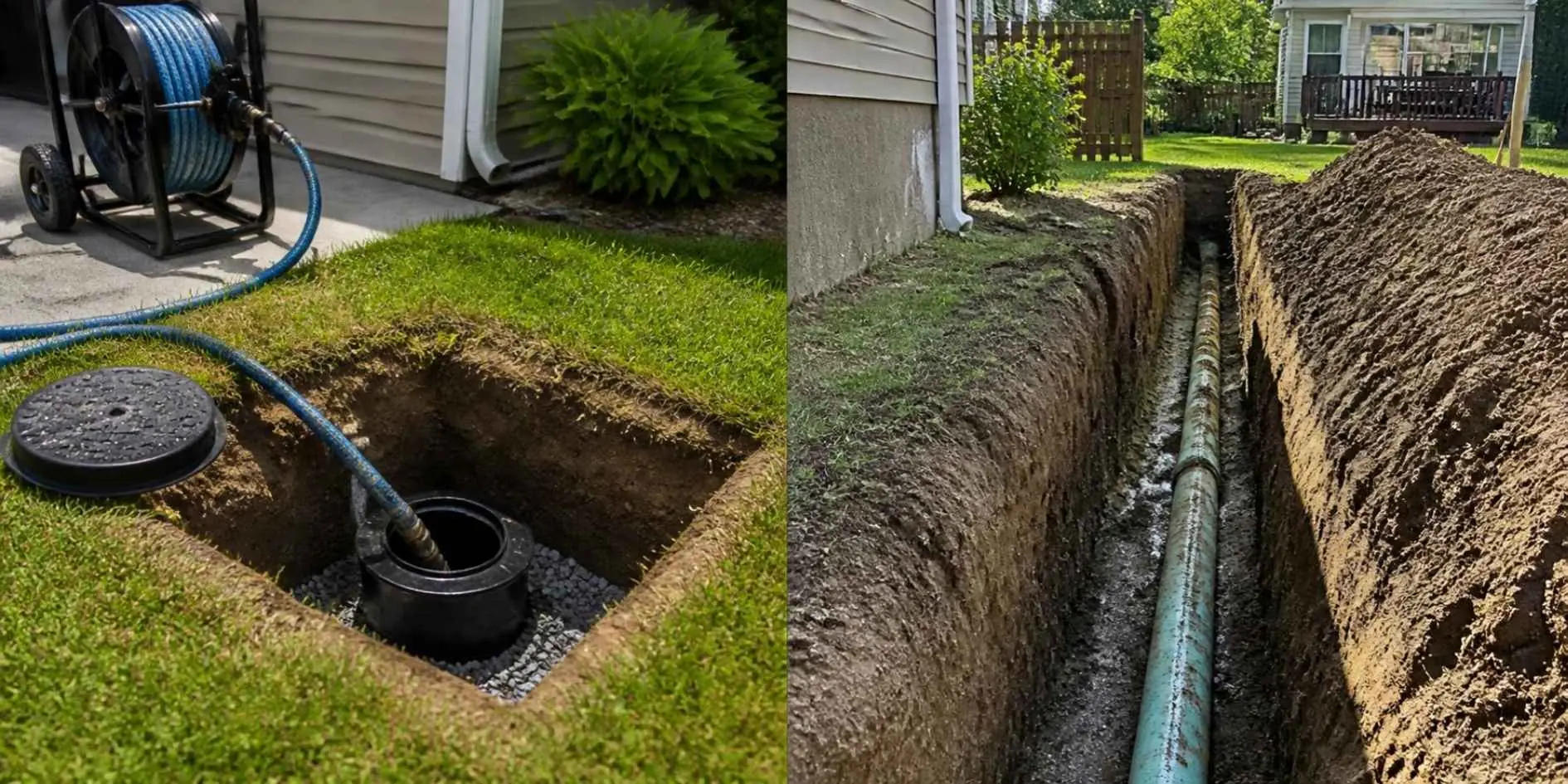
There's no single honest number for what a sewer line repair costs, since the real cost depends entirely on what a camera inspection finds and which repair method actually fits the damage. According to the same soil pattern documented across Tempe's service area, expansive clay and caliche soil is a real, physical reason sewer lines fail here more than in cities built on more stable ground.
Why the Diagnosis Comes Before the Number
A sewer camera inspection shows the actual cause, root intrusion, a cracked joint, a bellied section, or general aging, before any repair method gets chosen. Two homes with the same symptom, a slow-draining main line, can need completely different repairs once a camera actually looks inside the pipe.
This is why a repair quote given before an inspection is really just a rough range. The honest number comes after the camera pass, not before it.
Trenchless Repair: When It Applies
Trenchless methods, either a spot repair or a full pipe lining, work by accessing the line through existing cleanouts rather than digging a trench along its entire length. This dramatically reduces landscaping and hardscape disruption, which matters in older North Tempe yards with mature trees or in a driveway-crossing line in South Tempe.
Trenchless isn't universal, though. It works best on a line with localized damage or a pipe that's still structurally sound enough to line. A line that's failed broadly along its length, common with very old original clay pipe, often isn't a good trenchless candidate.
Traditional Trenching: When It's Still Necessary
Full excavation remains the right call when damage is extensive, when the pipe material itself needs full replacement rather than lining, or when the line's depth and the property's layout make trenchless access impractical. It costs more in landscaping restoration but is sometimes the only real option.
Our sewer line repair page covers the diagnostic process in more depth; this post is specifically about the cost comparison between the two repair approaches once a diagnosis is in hand.
What Actually Drives the Price Within Each Method
Line length and depth matter for both methods, a longer or deeper line costs more regardless of approach. Access matters too: a line running under an easily reached side yard costs less to work on than one crossing under a driveway or mature landscaping. And extent of damage sets the real ceiling, a single spot repair costs a fraction of a full-line replacement by either method.
Older neighborhoods like Ahwatukee, where most homes share the same 1970-1999 build era, tend to see more full-length replacements than isolated spot repairs, simply because original clay or cast iron lines from that era are often failing broadly rather than at one clean point.
What the Repair Timeline Actually Looks Like
A trenchless spot repair or lining job is often completed in a single day once the camera inspection has already identified the damage. Traditional trenching runs longer, typically several days once excavation, the actual pipe work, backfilling, and landscaping restoration are all accounted for.
Either way, the sewer line is out of service, or on limited use, during the active repair window, which is worth planning around, especially for a household with only one main line and no secondary bathroom access during the work.
Questions Worth Asking Any Contractor Before You Commit
Ask to see the actual camera footage, not just a verbal description of what it showed. Ask specifically why trenchless is or isn't being recommended for your line's condition, since a contractor who only offers one method regardless of what the camera shows isn't giving you a real choice. And ask what the landscaping restoration includes, since that cost sometimes gets treated as a separate line item after the fact rather than being clearly quoted upfront.
How Permitting Fits Into the Timeline
Sewer line replacement, particularly work affecting the connection to the city's main line, requires permitting and coordination with the City of Tempe. This adds a real, though usually predictable, step to the timeline. Budgeting for that coordination upfront, rather than being surprised by it mid-project, keeps the overall schedule realistic.
Why Getting a Second Opinion Is Reasonable Here
Given how much the recommended method affects the final cost, a second camera-informed opinion is a reasonable step for a significant repair, the same way it would be for a major roof or foundation decision. This isn't about distrust of any one contractor, it's about the size of the investment justifying a second, independent look at the same footage before committing to either method.
How Warranty Coverage Differs Between the Two Methods
Trenchless lining and traditional pipe replacement often carry different warranty terms, and it's worth asking directly rather than assuming they match. A lining product typically carries a manufacturer warranty tied to the specific material used, while a full traditional replacement is usually warrantied against the workmanship itself. Understanding which applies to your specific repair affects what recourse you'd have if an issue develops down the line.
The Real Takeaway on Cost
There's no way to give an honest price for a sewer line repair without a camera inspection first, and any quote given before that step is a rough guess at best. The right question isn't which method is cheaper in the abstract, it's which method the actual condition of your line supports, and that answer only comes from looking inside the pipe.
A Final Thought on Timing the Decision
Waiting until a sewer line fully fails to address a known, developing problem almost always costs more than acting on an early warning sign. If a camera inspection has already flagged a concern, even one not yet causing symptoms, treating that as useful advance notice rather than something to revisit later tends to produce better outcomes and lower total cost than waiting for a full failure.
Common Questions
Not always. Trenchless generally costs less in landscaping restoration, but the specialized equipment and lining materials have their own cost, so for a small, easily accessed repair, traditional trenching can sometimes come out comparable or even less expensive.
A camera inspection is the only reliable way to know. The pipe's condition, not just the symptom you're experiencing, determines which method is actually viable.
It varies significantly by policy. Some cover sudden failures but exclude gradual deterioration or root damage, so it's worth checking your specific policy rather than assuming either way.
For a genuinely localized spot repair with good line condition otherwise, yes, trenchless methods can sometimes avoid digging almost entirely, accessing the repair through an existing cleanout.
Trenchless repairs are often completed in a single day for a straightforward job, while trenching can take several days depending on the excavation scope and landscaping restoration needed afterward.
Have This Problem In Tempe?
Call now for a real diagnosis and a flat price before any work starts.
☎ Call (480) 741-9332