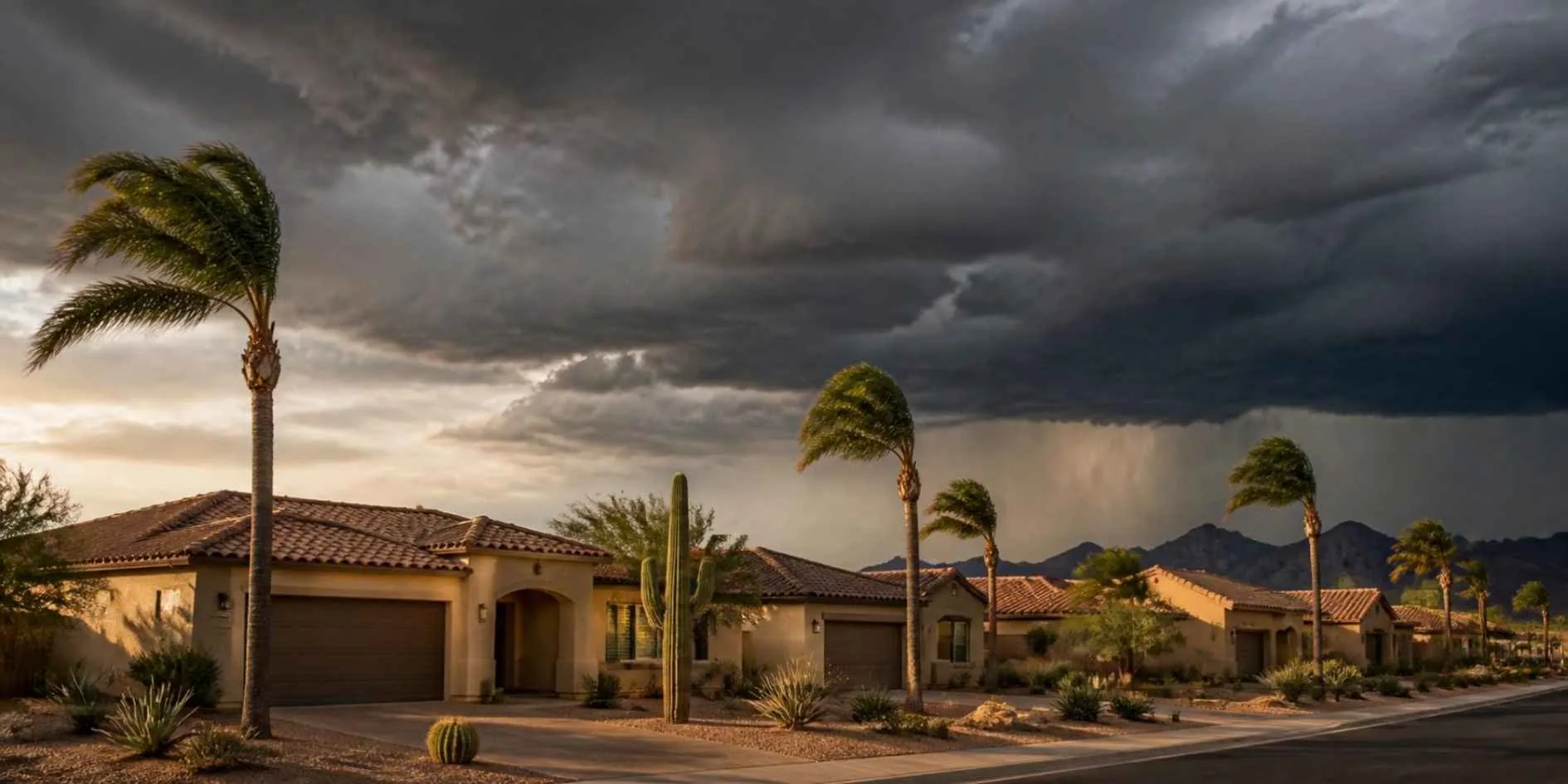
According to the National Weather Service's official definition, Arizona's monsoon season runs from June 15 through September 30, and it brings sudden, heavy storms that genuinely stress plumbing systems in ways the rest of the year doesn't. A short pre-season checklist catches most of the real risks before the first big storm rather than during it.
Check Roof and Area Drains Before the Season Starts
Roof drains and area drains that handle a slow trickle of rain most of the year can get genuinely overwhelmed by a sudden monsoon downpour, especially if debris has accumulated since the last storm season. Clearing visible debris from drain openings before monsoon season starts is a simple step that prevents a real, common cause of drain backup calls.
A drain that's already slow before monsoon season will only get worse under storm volume. If you've noticed slow drainage anywhere, addressing it with drain cleaning before the season starts is genuinely cheaper than an emergency call during an active storm.
Test Your Sump Pump If You Have One
A sump pump that hasn't been tested since last season is a real, avoidable risk once monsoon storms start. Pouring water directly into the pit to confirm the float switch and pump both activate is a five-minute test worth doing before the season, not after the first storm reveals a problem. Our sump pump page covers what a proper installation and battery backup actually involve if you don't already have reliable coverage.
Know Your Property's Real Drainage Path
Understanding where water actually flows on your property during a heavy storm, and confirming that path doesn't direct water toward your foundation, is worth doing before the season rather than discovering a problem during an active downpour. Grading issues and clogged exterior drainage are easy to overlook until a storm makes them obvious.
Check for Signs of Existing Water Intrusion
A musty smell, a water stain, or visible moisture in a low-lying area of the home are all worth investigating before monsoon season adds real volume to whatever is already happening. In lake-adjacent communities like West Mesa's Dobson Ranch, properties closer to the water features are worth an especially close look given the area's naturally higher water table.
Check Outdoor Faucets and Irrigation Before the Season
A slow leak at an outdoor faucet or an irrigation connection is easy to miss during drier months when the ground absorbs small amounts of water without visible pooling. Once monsoon rain adds to that same spot, what was an unnoticed drip can contribute to real standing water and, in some cases, erosion around a foundation. A quick check of every outdoor connection before the season starts catches this early.
What to Do If a Storm Overwhelms Your System Anyway
Even a well-prepared property can be overwhelmed by a genuinely severe monsoon cell. If you notice backup or flooding during an active storm, avoid running additional water inside the house, since that adds to a system already at capacity. Document what you're seeing if it's safe to do so, and call for emergency service once the immediate danger has passed rather than waiting until the storm fully clears if water is actively entering the home.
Building a Habit Rather Than a One-Time Check
The real value of a pre-season checklist comes from repeating it every year, not just doing it once. Housing settlement, tree root growth, and general wear all change a property's drainage risk over time. A check that caught nothing last year isn't a guarantee this year will be the same, especially given how much a single severe storm cell can differ from the last.
What Makes This Season Different From Ordinary Rain
A typical rainy day in most parts of the country spreads precipitation over hours. A Tempe monsoon cell can drop a significant amount of rain in a much shorter window, which is exactly the kind of sudden volume that overwhelms a drain or sump system designed around average, not peak, conditions. Preparing specifically for that intensity, not just for rain in general, is what separates a genuinely useful monsoon checklist from generic seasonal advice.
A Note on Dust Storms Ahead of the Rain
Monsoon season in Tempe often brings dust storms, haboobs, before the rain itself arrives, and that dust can accumulate in gutters and drain openings in the days leading up to a storm. Checking and clearing drains again right before an approaching storm, not just once at the start of the season, catches this accumulation before it compounds the flooding risk.
Putting Together a Storm-Ready Contact List
Having your plumber's number saved before the season starts, rather than searching during an active storm with limited cell signal or power, is a small step that saves real time when it matters. The same goes for knowing your insurance provider's claims number, since storm damage documentation is easier to handle when you're not trying to find contact information during the emergency itself.
A Checklist Worth Repeating Every Year
Clear roof and area drains. Test the sump pump if you have one. Confirm your property's drainage path. Check for existing signs of water intrusion. Check outdoor faucets and irrigation connections. Save emergency contact numbers. None of these steps take long individually, but done together before the season starts, they cover the great majority of monsoon-related plumbing emergencies we see every year, year after year.
One Last Practical Reminder
Set a calendar reminder for late May rather than relying on memory to prompt this checklist next year. A recurring, automatic prompt is far more reliable than good intentions alone, especially since monsoon prep tends to fall off everyone's radar once the season actually ends and the immediate risk feels distant again.
Common Questions
Late May or early June, just before the season typically starts in mid-June, gives you time to address anything the checklist turns up before the first major storm arrives.
No, it depends on your property's drainage and whether you have a below-grade area or a history of water pooling near the foundation. Not every home needs one, but a property with either risk factor genuinely benefits from one.
Drain backups from debris-clogged roof and area drains overwhelmed by sudden storm volume are consistently among the most common calls during the season.
Yes, particularly if the municipal system is also handling high storm volume simultaneously, which can occasionally back up into a property's own line, especially if that line already has partial blockage from roots or buildup.
For a property with a known history of water intrusion near the foundation, having a few on hand as a stopgap measure is reasonable, though addressing the underlying drainage issue is a more permanent fix than relying on barriers each storm.
Have This Problem In Tempe?
Call now for a real diagnosis and a flat price before any work starts.
☎ Call (480) 741-9332